Quick Answer
A 6Ah battery holds 50% more capacity than a 4Ah battery, which means longer runtime — and under heavy load, more stable power delivery. Both deliver the same nominal power output at the same voltage under light conditions, but under high-drain use, a 6Ah battery maintains more stable voltage due to lower internal resistance. A 4Ah battery typically runs a 2-amp tool for 2 hours; a 6Ah runs the same tool for 3 hours. The 6Ah is heavier and costs 20–50% more, and takes 30–60 minutes longer to recharge. Choose 4Ah for light, handheld tasks where weight matters; choose 6Ah for extended, high-drain jobs like circular saws, rotary hammers, or large-area garden tools. A 6Ah can safely replace a 4Ah in any tool of the same voltage and brand platform.
In 2026, the choice between 4Ah and 6Ah power tool batteries is more relevant than ever. The global lithium-ion battery market continues to expand rapidly, with over 100 GW of new storage capacity deployed in 2025 alone — a 40% increase year-over-year. For power tool users, this means better battery technology at more accessible price points.
A 4Ah battery will run a 2-amp drill for about 2 hours; a 6Ah runs it for 3 hours. But the 6Ah costs more, weighs more, and takes longer to charge. Choosing between a 4Ah and 6Ah battery comes down to one question: do you need longer runtime and more stable power under load, or do you need a lighter, faster-charging battery? The answer depends entirely on what you are powering and how long your typical work session runs.
This guide covers everything you need to know about 4Ah vs 6Ah battery: what Ah actually means, how capacity affects runtime, weight, charge time, cost, and interchangeability — with real-world examples and data to help you make the right decision.
Key Takeaways
- Ah measures capacity (runtime), not just power: Both 4Ah and 6Ah batteries at the same voltage deliver the same nominal power to a tool under light loads. The primary difference is how long they run — a 6Ah battery provides 50% more runtime than a 4Ah under the same load.
- Under heavy load, 6Ah delivers more stable power: High-drain tools like circular saws can cause a 4Ah battery's voltage to sag under peak current draw, slowing the tool. A 6Ah battery's lower internal resistance maintains more stable voltage, resulting in more consistent performance during demanding cuts or drilling.
- Runtime difference is significant in real use: Using a tool that draws 2 amps, a 4Ah battery lasts 2 hours; a 6Ah lasts 3 hours. For Ryobi's hybrid work light, a 6Ah battery runs for over 8 hours versus 2.5 hours on a 2Ah — demonstrating how Ah directly scales with runtime.
- Charge time is longer for 6Ah: A 4Ah battery typically recharges in 60–90 minutes; a 6Ah takes 90–120 minutes with a standard charger. If you only have one battery and need to work continuously, this matters.
- A 6Ah can safely replace a 4Ah in any compatible tool from the same brand platform, as long as voltage matches. Higher Ah only improves runtime and load stability — it does not damage tools.
- Never mix different Ah batteries in a pack: Connecting batteries with different capacities in series causes imbalanced charging, overheating, and accelerated degradation across the entire pack.

Main content:
- Quick Answer
- Key Takeaways
- What Does Ah Mean in a Battery? Is Amp the Same as Ah?
- 4Ah vs 6Ah Battery: Head-to-Head Comparison
- Is a Higher Ah Battery Better? Does More Ah Mean More Power?
- Is There a Big Difference Between 4Ah and 6Ah?
- Can I Use a 6Ah Battery Instead of a 4Ah?
- Can You Mix Different Ah Batteries?
- Does Battery Capacity Increase in Parallel?
- Selecting the Right Ah Battery for Your Application
- Conclusion
- Frequently Asked Questions
What Does Ah Mean in a Battery? Is Amp the Same as Ah?
Ampere-hour (Ah) measures how much electrical charge a battery can store and deliver over time. A 4Ah battery can supply 4 amps of current continuously for 1 hour, or 1 amp for 4 hours, or 2 amps for 2 hours. The formula is straightforward: Runtime (hours) = Capacity (Ah) ÷ Current draw (amps).
Amps (A) and ampere-hours (Ah) are related but different. Amps measure the current flowing at any given moment — the rate of electrical flow. Ampere-hours measure the total amount of charge available — the capacity of the "fuel tank." A battery's Ah rating tells you how long it can sustain a given current, not how strong that current is.

Voltage determines power; Ah determines runtime. This distinction is critical when comparing 4Ah vs 6Ah batteries of the same voltage: under light-to-moderate loads, the tool will perform similarly with either battery — the primary difference is how long before the battery needs recharging. Under heavy load, however, the 6Ah's greater cell count and lower internal resistance can result in meaningfully more stable power delivery.
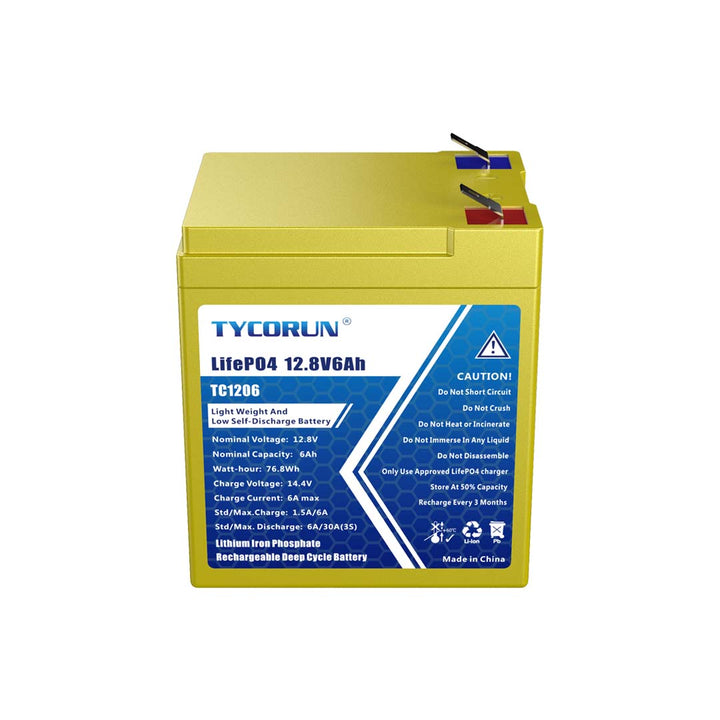
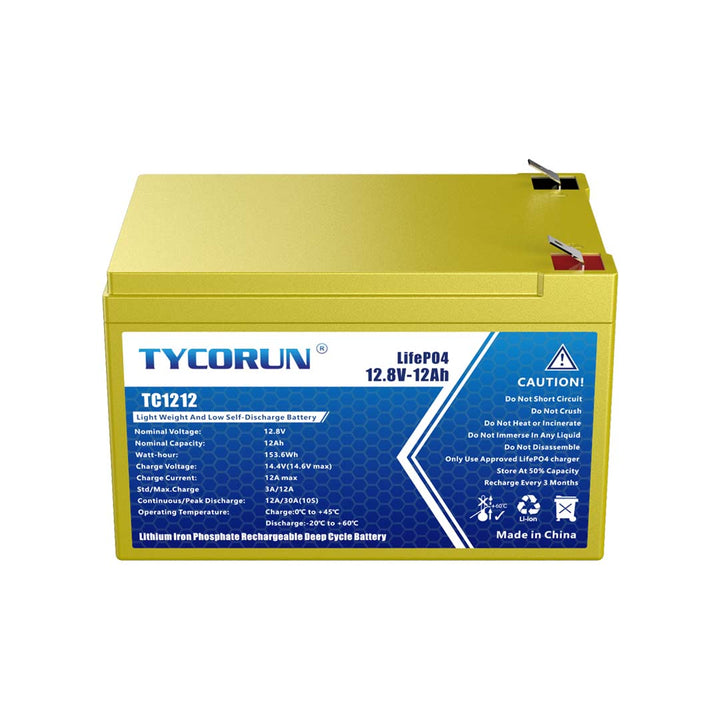
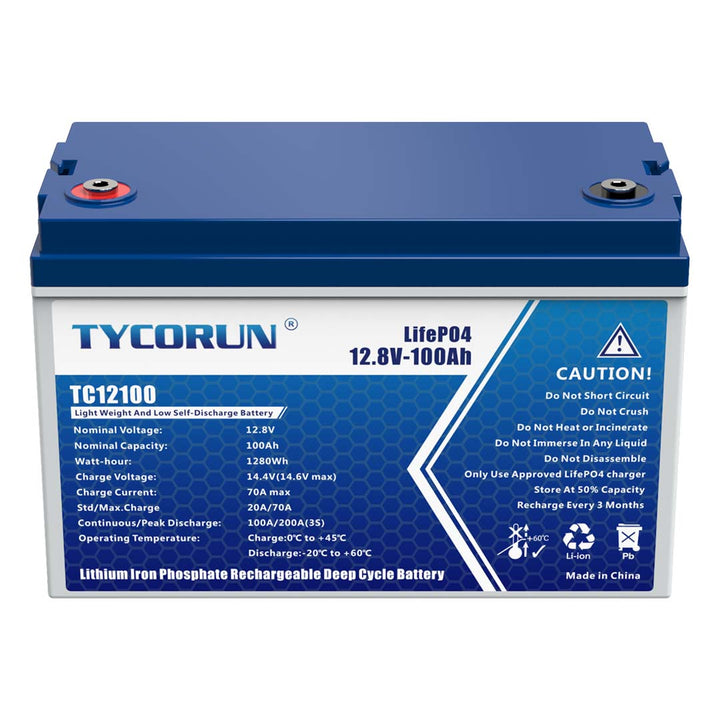
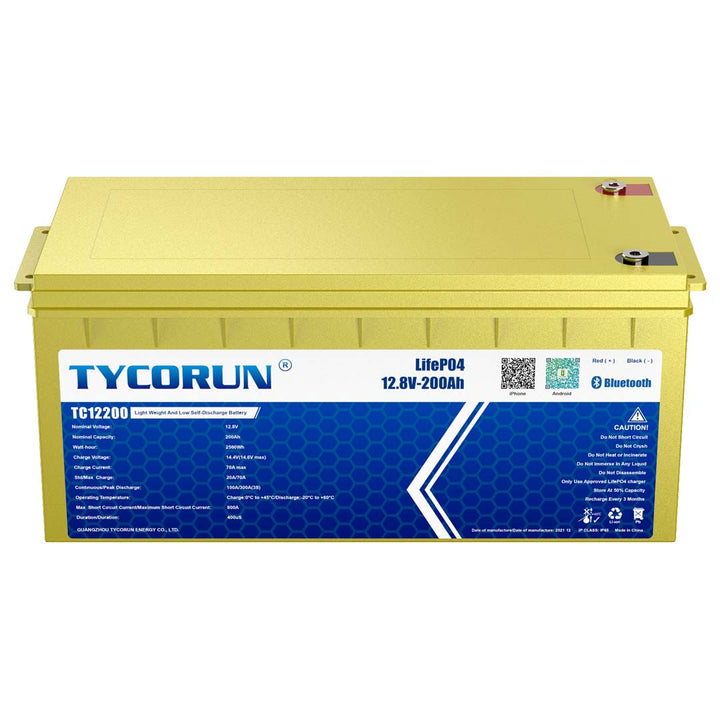
Here are some 12V batteries at different Ah ratings for reference:
|
|
12v 6ah
|
12v 12ah
|
12v 100ah
|
12v 200ah
|
|
Product image
|
 |
 |
 |
 |
|
Price & Discount
|
$49.00(-29%)
|
$42.90(-64%)
|
$579.99(-27%)
|
$399.99(-78%)
|
|
Charge Current
|
1.2A
|
2.4A
|
20A
|
20A |
|
Discharge Current
|
6A |
12A |
100A |
100A |
|
More information |
Click to get the details |
Click to get the details |
Click to get the details |
Click to get the details |
This article covers some important aspects regarding 4ah vs 6ah battery because the question "4ah vs 6ah battery" is one that is commonly asked. What are amps? Current flow is measured in amperes. An electrical charge of one coulomb per second is represented by one ampere of current.
A battery's total discharge duration and current flow are combined to form an ampere hour. Batteries' depth of discharge, or DOD, is regarded as a crucial factor. It represents the proportion of the battery's overall capacity that has been discharged.
Factors Affecting Battery Ah
The actual usable capacity of a battery in real-world conditions differs from its rated Ah for several reasons:
- Temperature: Cold temperatures reduce available capacity — a lithium-ion battery can lose 20–30% of its rated Ah at 0°C compared to 25°C. High temperatures above 40°C accelerate degradation and reduce long-term capacity retention.
- Discharge rate (C-rate): Rapid discharge at high current draws less total energy from the battery than slow, steady discharge. A battery rated at 6Ah at 0.2C may deliver noticeably less at 2C under heavy load.
- Electrode cross-section and active material quantity: More active material in a larger electrode area = higher Ah. This is why a 6Ah battery is physically larger and heavier than a 4Ah of the same chemistry.
- Battery age and cycle count: All rechargeable batteries lose capacity over time. A lithium-ion battery typically retains 80% of original capacity after 500–1,000 full cycles for standard Li-ion, while LiFePO4 chemistry can sustain 2,000–5,000 cycles, depending on usage conditions and depth of discharge.
- Depth of discharge (DOD): Regularly discharging a battery to 100% DOD degrades it faster than shallower cycles. For lithium-ion, staying within 20–80% SOC significantly extends cycle life.
4Ah vs 6Ah Battery: Head-to-Head Comparison
This table covers the key differences between 4Ah and 6Ah batteries for practical decision-making:
| Feature | 4Ah Battery | 6Ah Battery |
|---|---|---|
| Capacity | 4,000 mAh | 6,000 mAh (50% more) |
| Runtime at 2A draw | ~2 hours | ~3 hours |
| Power output (light load) | Same (voltage-dependent) | Same (voltage-dependent) |
| Power stability (heavy load) | Voltage may sag under peak draw | More stable — lower internal resistance |
| Weight | Lighter — less fatigue for overhead/handheld use | Heavier — more cells required |
| Charge time (standard charger) | 60–90 minutes | 90–120 minutes |
| Price premium | Lower — baseline option | 20–50% more expensive |
| Physical size | More compact | Larger (more active material) |
| Best for | Impact drivers, detail sanders, drills, light garden tools, precision work | Circular saws, rotary hammers, miter saws, leaf blowers, extended sessions |
| Interchangeable? | Yes — same voltage, same brand platform | Yes — 6Ah can replace 4Ah safely |
How Long Does a 4Ah Battery Last?

A 4Ah battery's runtime depends entirely on the current draw of the device being powered. The calculation is: Runtime = 4Ah ÷ current draw (amps).
- At 200 mA (0.2A) — e.g., a small LED light: approximately 20 hours
- At 500 mA (0.5A) — e.g., a digital camera: approximately 8 hours
- At 2A — e.g., a cordless drill on light work: approximately 2 hours
- At 4A — e.g., a power tool on heavy load: approximately 1 hour
In real-world conditions, actual runtime is typically 10–20% less than the theoretical calculation due to heat generation, internal resistance, and discharge rate inefficiency. Battery chemistry also matters: a 4Ah lithium-ion (LiFePO4) battery will consistently outlast a 4Ah lead-acid battery of the same rated capacity under the same load, because lead-acid batteries lose effective capacity faster under moderate-to-high discharge rates.
How Long Does a 6Ah Battery Last?
A 6Ah battery runs 50% longer than a 4Ah at the same current draw:
- At 200 mA: approximately 30 hours
- At 2A: approximately 3 hours
- At 4A: approximately 1.5 hours
- At 6A: approximately 1 hour
A real-world test published by SlashGear using Ryobi's hybrid work light found that a 2Ah battery ran for 2.5 hours, a 4Ah for 5 hours, and a 6Ah for over 8 hours — a near-linear scaling that confirms Ah ratings translate directly to runtime in low-to-medium drain applications. For high-drain power tools, the Makita 18V LXT 5Ah battery delivered 65% more runtime than the 3Ah counterpart — consistent with the theoretical Ah ratio.
Is a Higher Ah Battery Better? Does More Ah Mean More Power?
Not simply — and the answer is more nuanced than the common "Ah only affects runtime" explanation.

Under light to moderate loads, a 4Ah and 6Ah battery of the same voltage deliver essentially the same power to the tool. The tool draws what it needs, and both batteries supply it equally. In this scenario, Ah primarily determines how long the battery runs before needing a recharge — nothing more.
However, under heavy load conditions — such as a circular saw cutting hardwood or a rotary hammer driving into concrete — the picture changes. A 6Ah battery typically contains more cells than a 4Ah of the same voltage. More cells in the pack means lower total internal resistance. Lower internal resistance means less voltage drop under peak current draw. In practice, this means a 6Ah battery sustains more stable voltage during demanding tasks, while a 4Ah battery under the same load can experience voltage sag that visibly slows the tool or reduces cutting force. The difference is most pronounced during sustained heavy work, not brief bursts.
So the accurate answer is: a 6Ah battery provides 50% more runtime at all loads, and can deliver more stable, consistent power under high-drain conditions where a 4Ah battery's voltage sags. For light and intermittent use, the power difference is negligible — and the extra weight and cost of the 6Ah provides no meaningful benefit.
A higher Ah battery is better specifically when extended runtime is your primary constraint — for example, professional contractors who cannot afford to stop mid-job to recharge, or operators of high-drain tools like rotary hammers and miter saws where a 4Ah battery may need replacement multiple times per session. For lighter, intermittent use — remote controls, sensor devices, small handheld tools — the extra weight and cost of a 6Ah battery provides no meaningful benefit over 4Ah.
Is There a Big Difference Between 4Ah and 6Ah?
In terms of runtime and physical size: yes, 50% more capacity is a significant difference. In terms of power delivery under light loads: minimal difference. Under heavy, sustained loads: a meaningful difference in voltage stability.
The 6Ah battery contains 50% more active electrode material than the 4Ah, which is why it is physically larger and heavier. The capacity of any battery is determined by the quantity of active material in the electrodes — more active material means more chemical energy available to convert to electrical energy, which is why higher Ah always corresponds to larger battery volume and greater weight. This also means a 6Ah battery cannot be made the same size as a 4Ah without a chemistry change.
In practice, the difference matters most in these scenarios:
- It matters a lot: Professional power tool use, full-day outdoor work, high-drain devices (circular saws, large trimmers), situations where recharging is inconvenient, sustained heavy cutting or drilling where voltage stability affects performance
- It matters less: Occasional DIY, light-duty handheld tools, devices used in short bursts, applications where weight causes fatigue
Can I Use a 6Ah Battery Instead of a 4Ah?
Yes — with one condition: the voltage and battery platform must match.

A 6Ah battery can safely replace a 4Ah battery in any compatible tool without causing damage or affecting tool performance. The tool will simply run longer per charge, and under heavy loads will benefit from the more stable voltage the 6Ah provides. The higher Ah does not push more current into the tool than it requests — the tool's motor draws what it needs, and the battery supplies it. The only practical considerations are the extra weight of the 6Ah and its longer recharge time.
The condition that must be met is voltage and platform compatibility. A 6Ah 18V battery from one brand cannot be used in a tool designed for an 18V battery from a different brand (different connectors, different BMS communication). And a 6Ah 18V battery cannot replace a 4Ah 40V battery — the voltage difference makes them incompatible regardless of capacity. Within the same brand system at the same voltage, upgrading from 4Ah to 6Ah is always safe and beneficial.
Can You Mix Different Ah Batteries?
No — mixing batteries with different Ah ratings in a series or parallel pack is not recommended.
When batteries of different capacities are connected in series or parallel, they charge and discharge at different rates. In a series connection, the lower-capacity battery reaches full discharge first — while the higher-capacity battery is still delivering current. This forces the weaker battery into over-discharge, which permanently damages it and can cause overheating. In a parallel connection, the higher-capacity battery attempts to charge the lower one when current demand drops, creating uncontrolled current flow between cells.
For a single-battery replacement in a standalone device (one battery slot), using a 6Ah instead of a 4Ah is fine. The problem occurs when multiple batteries are grouped into a battery pack or bank together.
Does Battery Capacity Increase in Parallel?
Yes. When identical batteries are connected in parallel, total capacity (Ah) adds up while voltage stays constant. Two identical 4Ah batteries in parallel produce 8Ah at the same voltage. Three identical 6Ah batteries in parallel produce 18Ah.
By contrast, connecting batteries in series adds voltage while keeping capacity the same. Two 12V 4Ah batteries in series produce 24V at 4Ah. This is how EV battery packs and home energy storage systems achieve both high voltage and high capacity — through combinations of series and parallel cell groups (nSnP configurations).
Key rule: Only connect batteries of identical voltage, battery capacity, chemistry, age, and ideally the same production batch in parallel. Mismatched batteries will transfer current between cells even at rest, causing premature degradation across the weaker unit.
Selecting the Right Ah Battery for Your Application
The right Ah rating depends on three factors: the current draw of your device, how long you need it to run between charges, and how much weight and cost you are willing to accept.
| Application | Typical Current Draw | Recommended Ah | Reason |
|---|---|---|---|
| Remote controls, clocks, sensors | Very low (mA range) | 1–2Ah | Higher Ah adds unnecessary weight and cost |
| Cordless drills, screwdrivers, lights | 1–3A | 2–4Ah | Good balance of runtime and weight for handheld use |
| Impact drivers, detail sanders, string trimmers | 2–4A | 4Ah | Adequate runtime without excessive weight penalty |
| Circular saws, rotary hammers, miter saws | 5–10A+ | 6Ah+ | High drain depletes 4Ah quickly; 6Ah reduces interruptions and maintains stable voltage under load |
| Leaf blowers, large lawn mowers | 8–15A | 6–9Ah | Extended session tool — maximum runtime matters |
| Home energy storage, solar backup | Continuous load | 100–200Ah (12V LiFePO4) | Whole-day or overnight energy supply requires large Ah reserves |
Read: mAh vs Wh: Understanding Battery Capacity and How to Choose the Right One
Conclusion
The 4Ah vs 6Ah battery decision comes down to runtime, power stability under load, and portability. Both batteries deliver similar power at the same voltage under light conditions — but under heavy, sustained loads like circular saws and rotary hammers, the 6Ah's lower internal resistance maintains more stable voltage, resulting in more consistent tool performance. And across all conditions, the 6Ah sustains that performance 50% longer before needing a recharge.
For light, handheld, or intermittent-use tools, a 4Ah is usually the better choice: it is lighter, cheaper, and charges faster. For extended work sessions, high-drain tools, or any situation where stopping to recharge — or losing power mid-cut — is disruptive, the 6Ah is worth the extra cost and weight.
A 6Ah can always replace a 4Ah in any compatible tool — it will never harm the tool and will extend both runtime and heavy-load performance. Never mix 4Ah and 6Ah batteries together in a multi-battery pack, as the capacity mismatch causes damaging charge imbalance. When in doubt, match your Ah to your longest expected work session: calculate your tool's average current draw, estimate how many hours you need, and choose the battery capacity that covers it with a reasonable margin.
Frequently Asked Questions
Is a 4Ah battery more powerful than a 2Ah battery?
Under light loads, a 4Ah battery has twice the runtime of a 2Ah at the same voltage — but delivers identical power output for most tasks. The tool or device will perform the same with either battery under normal conditions; the 4Ah simply runs twice as long before requiring a recharge. Under sustained high-drain use, the 4Ah may also maintain slightly more stable voltage due to its lower internal resistance compared to the 2Ah. The same principle applies across all Ah comparisons: higher Ah = longer runtime and better voltage stability under heavy load.
What does 6Ah mean on a lithium battery?
6Ah (ampere-hours) on a lithium battery means the battery can deliver 6 amps of current continuously for 1 hour, or proportionally scaled: 3 amps for 2 hours, 1 amp for 6 hours, and so on. It is a measure of total energy storage capacity, not power output. The higher the Ah, the longer the battery can power a device before needing to be recharged — and the more stable its voltage tends to be under high current draw.
How many amps are in a 12-volt battery?
12-volt batteries are available in a wide range of amp-hour ratings — commonly 6Ah, 12Ah, 18Ah, 35Ah, 45Ah, 60Ah, 100Ah, and 200Ah, among others. The "amps" (current) a 12V battery can deliver at any moment is separate from its Ah capacity: a 12V 100Ah battery can supply 100A continuously for 1 hour (or 10A for 10 hours). The working current also depends on the load connected to the battery and the battery's maximum continuous discharge rating (CDR).
Can I use a 6Ah battery instead of 4Ah in my power tool?
Yes — as long as the voltage matches and both batteries are from the same brand platform with compatible connectors. Switching from 4Ah to 6Ah in a compatible tool is always safe: the tool draws only the current it needs, regardless of the battery's total capacity. You get 50% more runtime and, under heavy loads, more stable voltage and more consistent tool performance. The trade-offs are additional weight and a longer recharge cycle.
Do 4Ah and 6Ah batteries have the same lifespan?
Both 4Ah and 6Ah lithium-ion batteries are typically rated for 500–1,000 charge cycles for standard Li-ion chemistry, while LiFePO4 achieves 2,000–5,000 cycles depending on depth of discharge and operating conditions. In practical terms, the 6Ah may outlast the 4Ah in daily use because it needs fewer recharge cycles to do the same total work — each cycle uses a smaller proportion of its available depth. Lifespan in years (3–5 years for standard Li-ion, longer for LFP) is roughly similar for both formats if properly maintained.
Related article: 36ah lithium battery, Battery reserve capacity, Top 10 power battery cell manufacturers