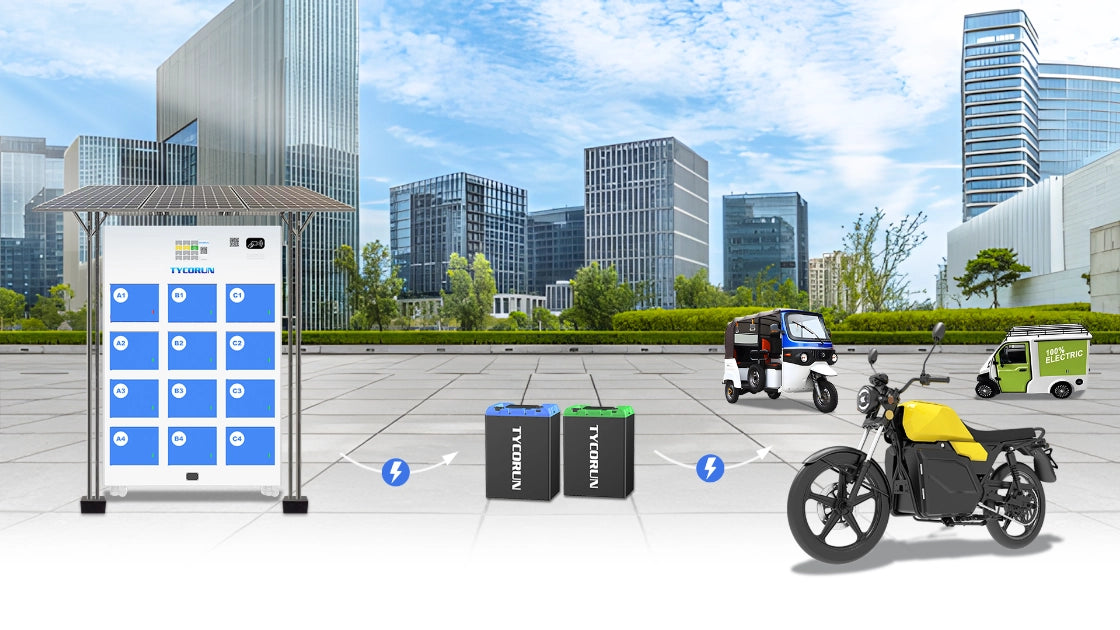
Effibike Partners with TYCORUN on a Swapping Solution for Delivery Vehicles
26 Day Delivery
From Design to Sample Deployment
$150,000 Total Cost
Including Battery Swap Cabinets & Installation
125% Annual ROI (First Year)
Fast Payback & Sustainable Profit Growth

Challenges
With the advancement of Canada's green transportation policy and the rapid growth of urban instant delivery demand, Effibike urgently needs to build a more efficient energy supply system to improve its delivery capabilities. Canada's severe cold climate also places higher demands on battery performance and stable operation.
For example, in cold areas, lead-acid batteries and batteries with poor quality have problems such as a sudden drop in battery life, large voltage fluctuations, and difficulty starting. The charging speed of traditional charging piles will also drop significantly in low-temperature environments, and there are problems such as long charging time and low energy replenishment efficiency, which makes it difficult to meet the needs of high-frequency delivery scenarios.

Solutions
To help Effibike build an efficient and stable battery exchange distribution network, TYCORUN has tailored a complete set of intelligent battery exchange solutions for it:
Customized battery exchange cabinets adapted to low-temperature environments
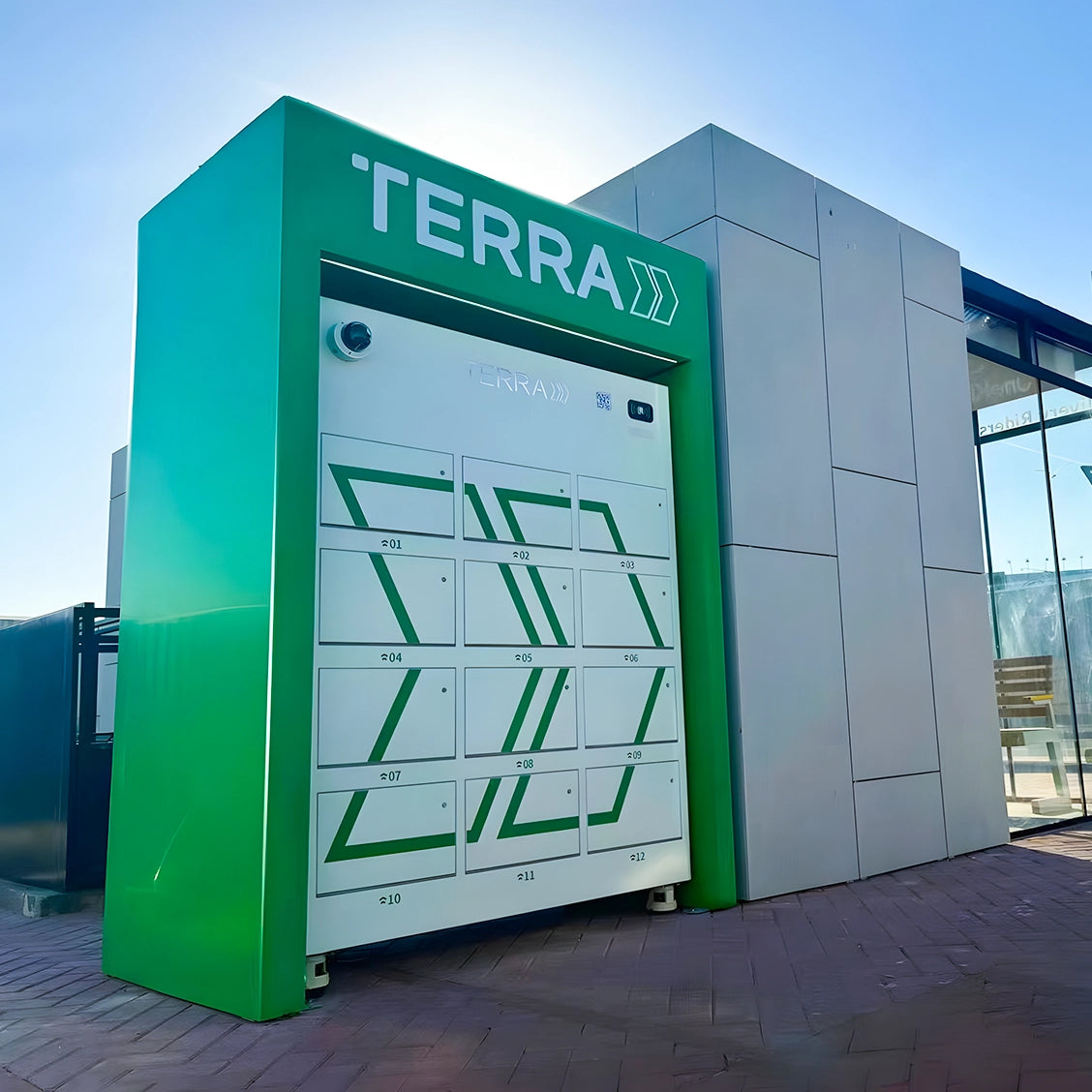
TYCORUN provides Effibike with 30 12-slot intelligent battery exchange cabinets with built-in heating modules to ensure that the battery can still maintain stable operation in Canada's cold climate. The system supports unmanned operation around the clock, greatly improving energy replenishment efficiency.
Battery options according to different transport needs
36 sets of 64V 45Ah batteries and 36 sets of 76.8V 40Ah battery swapping batteries are provided, which are compatible with a variety of local delivery electric vehicles. Some electric motorcycles used for light freight use 64V 45Ah batteries, while heavy-duty models for long-distance express and retail delivery rely on 76.8V 40Ah batteries, making the transport capacity more flexible.
Localized operation support
TYCORUN provides multilingual support and localized operation training to assist Effibike in establishing a complete customer service system and basic operation and maintenance capabilities, accelerating the implementation of the project and large-scale promotion.
Results
Improved efficiency of battery swapping: the average battery swapping time was shortened to 12 seconds, and the delivery personnel could quickly replace the battery on the way to ensure that high-frequency delivery was not interrupted
The return on investment was accelerated: compared with the traditional charging mode, the overall energy replenishment operation cost was reduced by about 42%. Since delivery personnel do not need to wait for a long time to charge, they can complete 10-12 more orders per day, and the unit vehicle operating income has increased by more than 20%. The system investment recovery period is within 8 months, and the ROI performance is excellent.
Perfect customer service system: Through training and support, Effibike has established a localized service team to improve customer satisfaction and brand professionalism
What They Achieved with Our Solution
TYCORUN Tailors Intelligent Battery Swap System for Effibike
The cabinets have been optimized to suit the Canadian climate, including the addition of a heat strips to ensure stable battery operation. To monitor the location of delivery motorcycles and the status of batteries as required by the delivery company in cooperation with Effibike, we customize the backend management system to provide clear visibility of date to improve the availability of fully charged batteries for swapping and boost delivery efficiency.
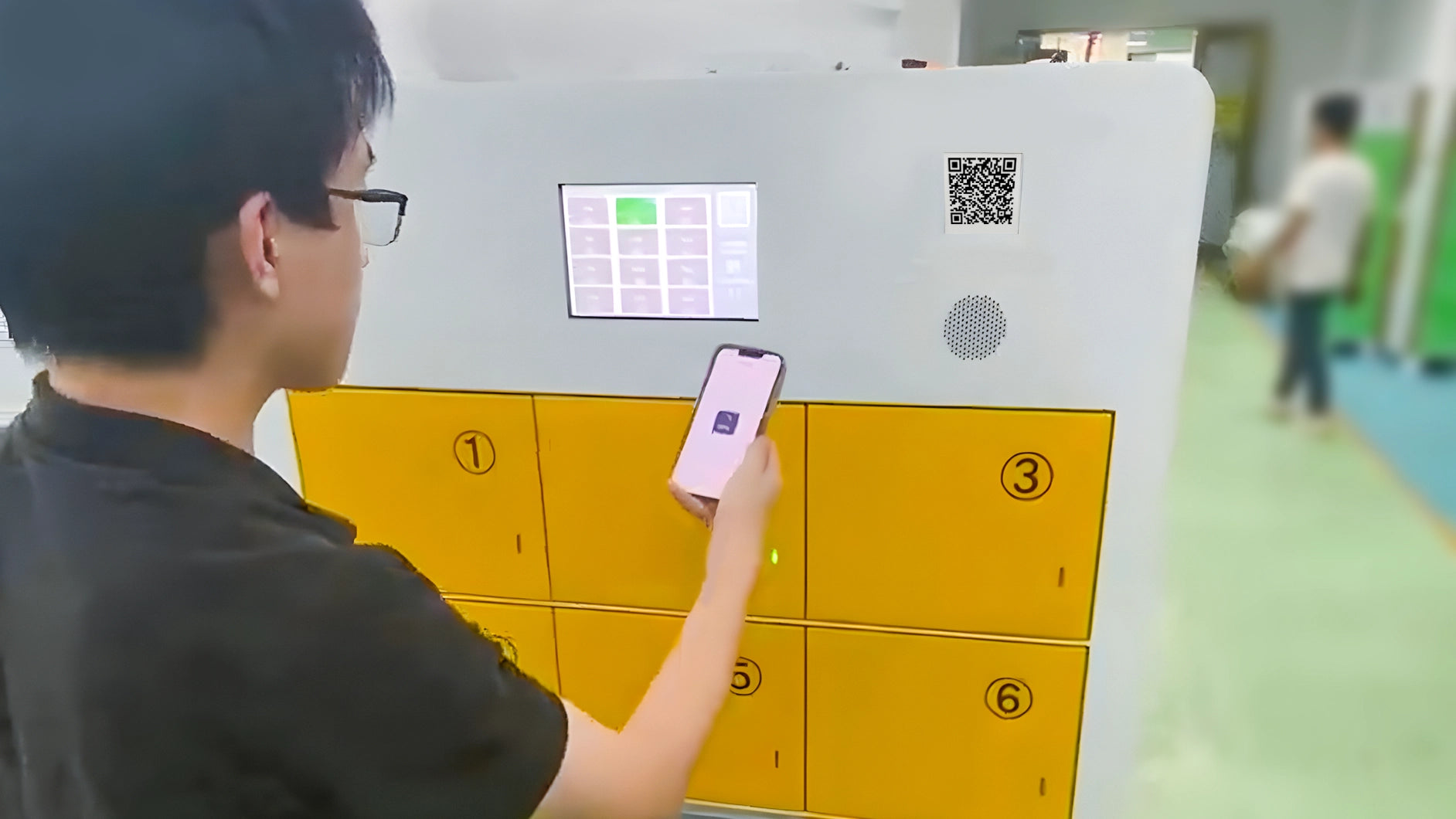
Services We Provided to Effibike
We delivered a complete battery swapping solution, including hardware deployment, and localized operational support.
Market and User Behavior Analysis
Comprehensively study local user habits, vehicle density and distribution needs, and accurately adjust the solution design.
Environmental and Regulatory Assessment
Assess extreme cold weather challenges and relevant Canadian policies and regulations to ensure that the solution meets local operational requirements.
Business Model Customization
Develop a flexible and efficient battery swap business plan based on Canadian market trends and customer goals.
Sample Testing Services
Strictly test the performance of prototypes in extreme cold and complex urban environments to ensure product reliability and stability.
Installation Support
Provide full-process installation services, covering infrastructure construction and system integration.
Cloud Management Platform
Provide a powerful backend management system to achieve real-time monitoring, data analysis and fleet management.
Team Training and Support
Carry out professional training programs to help local teams master technical and operational skills.
Satisfactory After-Sales Service
We provide rapid response, ensuring efficient and stable operation of the system, and improve customer satisfaction.

Questions You May Have
Click the “Contact Us” button on the page and provide your basic requirements — vehicle types, battery specs, expected number of swapping cabinets, and region. We will deliver a customized plan and quotation within 1 business day. Feel free to reach out anytime!
Besides the addition of heat strips to adapt to the cold climate in Canada, we conducted a thorough investigation of operational environment. Based on this, we assisted Effibike in deploying battery swapping cabinets along the frequently used routes to enhance the convenience of swapping and reduce the operational costs. We also upgrade the battery fault warning system in the cabinets to enhance safety and ensure timely maintenance.
Our batteries feature advanced semi-solid technology with long cycle life and reduce maintenance needs. They are also combined with a smart BMS system that continuously monitors voltage, current, and temperature, simplifying maintenance and ensuring safety. If maintenance is required, our experts are just a call away for a quick response.
We offer full-cycle support ranging from system integration, installation, testing to user training and post-deployment services. We also provide remote technical support and documentation to help you efficiently establish and expand your operation.

Transforming Electric Transport through Clean, Scalable Solutions