
CATL is accelerating the rollout of its sodium-ion technology across multiple energy sectors. From this year, the CATL sodium-ion battery will be used in battery swap stations, passenger vehicles, commercial fleets, and stationary energy storage systems. This technology focuses on safety, cold-temperature stability, and cost control. In this article, we explain what sodium-ion batteries are, the reasons behind CATL’s battery development, and how sodium-ion batteries compare with lithium-ion technology in practical applications.

Main content:
- Key takeaways
- What is a sodium-ion battery?
- Why did CATL develop sodium-ion batteries?
- How does the CATL sodium-ion battery work?
- Sodium-ion vs lithium-ion
- Energy density
- Cost comparison
- Safety and stability
- Performance in cold weather
- Charging speed and cycle life
- Environmental impact
- Applications of CATL sodium-ion batteries
- Sodium-ion and lithium-ion: not enemies but partners
- Final thoughts
- FAQs
- What is the technology of CATL lithium battery?
- Does the sodium-ion battery catch fire easily?
- Can sodium-ion batteries replace lithium-ion batteries?
- Can sodium-ion batteries be used in battery swapping systems?
- What is the future of sodium-ion batteries?
- Why is sodium easier to source than lithium?
Key takeaways
- CATL’s sodium-ion batteries, launched as a sustainable, low-cost alternative to lithium-ion
- CATL developed sodium-ion batteries to improve battery safety, cold-temperature performance, and environmental sustainability.
- CATL’s strategy integrates sodium-ion batteries and lithium-ion batteries as complementary technologies rather than competing replacements.
- Both types of batteries are important for clean energy. Sodium-ion batteries help the environment, while lithium-ion batteries give better performance.
What is a sodium-ion battery?
A sodium-ion battery is a rechargeable battery that stores and releases energy through the movement of sodium ions between two electrodes. The working principle mirrors lithium-ion battery operation, but sodium replaces lithium as the charge carrier.
How sodium-ion battery work?
Sodium ions move from the cathode to the anode during charging. Sodium ions move back during discharging. This ion movement generates electrical current that powers devices or systems.

The catl sodium ion battery uses industrial-grade sodium-ion chemistry designed for stability, scalability, and cost control. CATL applies existing battery manufacturing knowledge to sodium-based materials, which reduces production complexity.
Sodium is widely available in nature. Sodium extraction relies on common salt resources, which are also used in salt batteries, rather than scarce mineral reserves. This wide availability creates a stable and reliable raw-material foundation for battery manufacturing.
Why did CATL develop sodium-ion batteries?
CATL developed sodium-ion batteries to improve battery safety, cold-temperature performance, and environmental sustainability. The technology operates reliably in extreme temperatures, meets China’s latest EV battery safety standards, and has a lower carbon footprint than lithium-ion batteries. CATL also designed sodium-ion batteries to complement lithium-ion technology and support large-scale electric vehicle adoption without major vehicle redesign.

So, why did CATL develop and launch sodium-ion batteries?
- CATL’s sodium-ion batteries launched as a sustainable, low-cost alternative to lithium-ion
- Stable operation in extreme cold temperatures expands electric vehicle usability in colder regions.
- Higher safety performance meets China’s latest national EV battery safety standard (GB 38031-2025).
- Lower carbon footprint reduces environmental impact compared to lithium-ion batteries.
- Compatibility with standard battery modules and battery-swap systems simplifies vehicle integration.
- Complementary positioning alongside lithium-ion batteries supports diversified battery deployment.
How does the CATL sodium-ion battery work?
The CATL sodium ion battery operates through reversible sodium-ion movement between the cathode and anode. CATL engineers optimize electrode design and battery materials to improve ion mobility, efficiency, and long-term structural stability.
During charging, sodium ions leave the cathode material and embed into the anode structure. During discharging, sodium ions return to the cathode and release stored electrical energy.
CATL applies layered oxide cathodes and hard carbon anodes to balance energy output and cycle durability. Electrolyte formulation controls internal resistance and thermal behavior.
Battery management systems regulate voltage, temperature, and current flow. These controls maintain safe operation under varied environmental conditions.
Sodium-ion vs lithium-ion
Sodium-ion batteries and lithium-ion batteries share similar system architecture. Both technologies use cathodes, anodes, battery separators, electrolytes, and battery management systems.
Material chemistry defines performance differences. Lithium ions are smaller and lighter than sodium ions. This difference directly affects energy density and mass efficiency.
The catl sodium ion battery targets applications where cost stability, safety tolerance, and environmental resilience outweigh size constraints. Lithium-ion batteries retain priority where compact energy storage is essential.

Energy density
CATL says the Naxtra EV battery has an energy density of 175 Wh/kg. This is very high for a sodium-ion battery and close to lithium battery offering energy densities ranging from 120 Wh/kg to 270 Wh/kg, depending on the chemistry. For example, NMC Lithium batteries provide energy densities of 160–270 Wh/kg,. According to Gao, the battery can power an electric vehicle for up to 500 kilometers on one charge. It can also be charged more than 10,000 times, which helps lower long-term maintenance costs.
Cost comparison
Battery cost depends on materials and supply stability. Sodium materials cost less and are easier to source than lithium, which helps keep long-term pricing more stable. This reduces the impact of lithium market price changes.
The catl sodium ion battery focuses on lowering total operating cost rather than just upfront price. For example, CATL’s Naxtra 24V for heavy-duty battery trucks offers over eight years of service life and reduces total lifecycle costs by 61 percent compared to lead-acid batteries.
This shows that sodium-ion batteries can be more economical over time, especially for commercial and industrial use.
Safety and stability
Battery safety depends on thermal stability and reaction control. Sodium-ion batteries have a lower risk of thermal runaway because sodium is less chemically reactive than lithium.
The catl sodium ion battery is designed for safety at the material level. CATL states that sodium chemistry reduces dendrite formation and uses a highly safe electrolyte that blocks thermal runaway. Safety tests beyond national standards, including penetration and cutting tests at full charge, showed no smoke and no fire.
Lithium-ion batteries are also considered safe when properly designed. Lithium-ion batteries have high energy density but higher safety risks. To reduce the risk of fire or explosion, they use built-in protection circuits, built-in Battery Management Systems (BMS) that monitor temperature and voltage. and thermal management systems. Products from established manufacturers, such as TYCORUN lithium batteries, are tested to meet national safety standards before market use (CE, UN38.3 (transport safety), UL2271 (for light electric vehicle batteries), IEC62133, and OHSAS 18001:2007).
Both battery types achieve safety through different technical approaches, with sodium-ion focusing on material stability and lithium-ion relying on control and protection systems.
Explore: LiFePo4 battery safety
Performance in cold weather
One key advantage of the CATL sodium-ion battery is strong performance in cold weather. CATL states that the Naxtra Battery works in a wide temperature range from -40°C to +70°C. Even at -40°C, the passenger electric vehicle version keeps about 90% of its usable power.
Lithium-ion batteries can also be used in cold environments when they are specially designed. Some lithium batteries use improved electrolytes or anode materials to reduce internal resistance and perform better at low temperatures.
Lithium-ion batteries also rely on a Battery Management System (BMS). The BMS monitors battery temperature and controls charging when temperatures are too low. This helps prevent battery damage, such as lithium plating, while keeping discharge performance stable.
Charging speed and cycle life
Sodium-ion batteries generally offer faster charging speeds (often reaching 80% in 12–20 minutes) and superior low-temperature performance compared to lithium-ion, while offering a competitive cycle life of 3,000–6,000+ cycles. Lithium-ion (especially LFP) currently holds a slight edge in total cycle life (up to 8,000+) and energy density, but sodium-ion is catching up in longevity.
Environmental impact
Sodium-ion batteries are more environmentally friendly because sodium is easier to extract than lithium and causes less damage to the environment. Making sodium-ion batteries also uses fewer natural resources.
Lithium-ion batteries can also be environmentally safe when produced responsibly and recycled properly. However, sodium-ion batteries currently need more material to deliver the same energy, which can lead to higher greenhouse gas emissions. As sodium-ion technology improves, these emissions are expected to decrease over time.
Applications of CATL sodium-ion batteries
CATL is deploying its 3rd-generation sodium-ion batteries in 2026 across four key sectors: battery swapping systems, passenger vehicles (specifically, compact to mid-range city cars/daily drivers), commercial vehicles (light trucks, trucks, and vans), and energy storage systems. Their applications leverage superior low-temperature performance (retaining 90% capacity at -40°C), fast-charging capabilities, and lower costs compared to lithium.

- Passenger Vehicles (EVs): Targeting 500-km range vehicles and city cars. CATL's Naxtra sodium-ion batteries provide an alternative to lithium-iron-phosphate (LFP) with high energy density (up to 175 Wh/kg) and safety, with deployment in GAC Aion vehicles and others starting in 2026.
- Commercial Vehicles & Fleets: Used for light-duty trucks, logistics vans, and heavy-duty, long-service-life applications (e.g., 24V start-stop systems).
- Energy Storage Systems (ESS): Used for large-scale grid storage and industrial/residential energy storage, benefiting from the safety and stability of sodium chemistry.
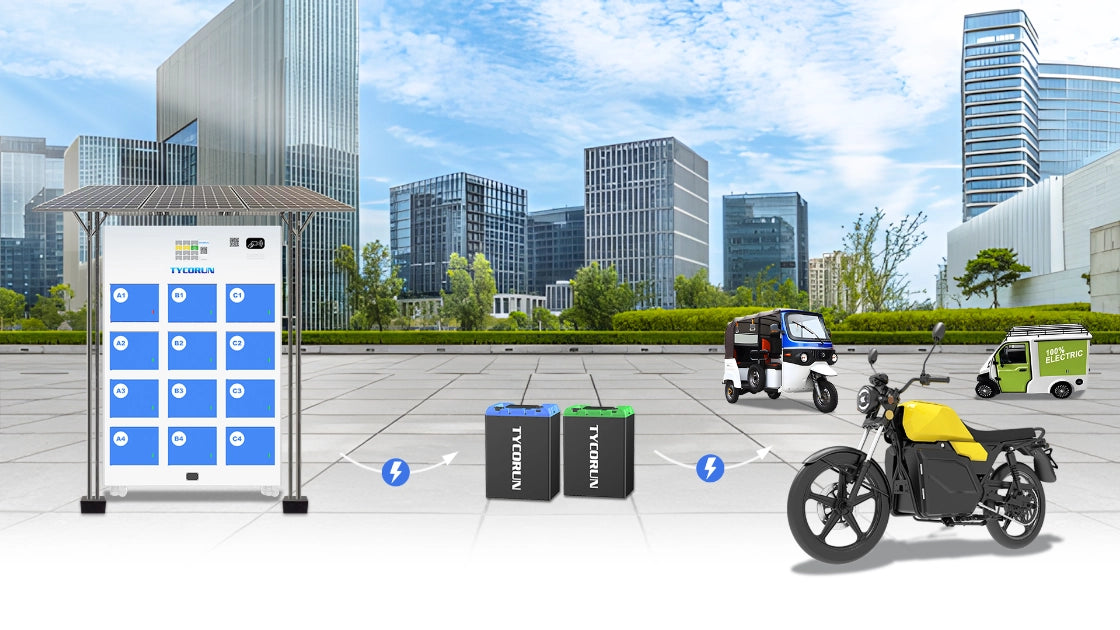
- Battery Swapping: Integrated into modular battery swapping systems (e.g., 42, 56, 81 kWh packs) for rapid energy replenishment.
Sodium-ion and lithium-ion: not enemies but partners
Sodium-ion (Na-ion) and lithium-ion (Li-ion) batteries are not enemies. Instead, they are partners in a growing and diverse energy market. Lithium-ion batteries are still the best choice for high-energy needs, such as premium electric vehicles that require long driving range and high performance.
The CATL sodium-ion battery does not aim to replace lithium-ion in every area. CATL clearly positions sodium-ion and lithium-ion as complementary technologies. Sodium-ion batteries are more suitable for cost-controlled applications and environments with extreme temperatures, where safety and stability are more important than maximum energy density.
In the future, hybrid battery systems can use both sodium-ion and lithium-ion batteries together in one energy platform. This combination helps balance performance, safety, and cost, making energy storage more flexible and efficient for different use cases. Both types of batteries are important for clean energy. Sodium-ion batteries help the environment, while lithium-ion batteries give better performance.
Final thoughts
Battery technology evolution requires multiple solutions rather than a single dominant chemistry. The catl sodium ion battery represents a structural expansion of energy storage options.
Sodium-ion and lithium-ion batteries fulfill different performance roles within the global energy ecosystem. CATL’s development strategy reflects this functional separation.
Long-term energy transition stability depends on diversified battery chemistry adoption rather than exclusive reliance on lithium-based systems.
FAQs
What is the technology of CATL lithium battery?
CATL uses nano-rivet technology to strengthen the internal cell structure. This improves battery safety, durability, and long-term reliability.
Does the sodium-ion battery catch fire easily?
No, sodium-ion batteries show “no smoke, no fire” behavior in extreme safety tests. This makes them suitable for harsh and high-risk environments.
Can sodium-ion batteries replace lithium-ion batteries?
Not completely. Sodium-ion batteries are better for low-cost and cold-weather use, while lithium-ion batteries are better for high-energy needs.
Can sodium-ion batteries be used in battery swapping systems?
Yes, sodium-ion batteries work well in battery swapping systems. Their safety and stable performance support frequent swapping operations.
What is the future of sodium-ion batteries?
Sodium-ion batteries will grow alongside lithium-ion technology. Future improvements will increase energy density and reduce emissions.
Why is sodium easier to source than lithium?
Sodium is widely available in seawater and the Earth’s crust. This makes supply more stable and less affected by global shortages.
Related Articles: Top 10 sodium-ion battery companies, Lithium vs sodium battery, Sodium sulfur battery